
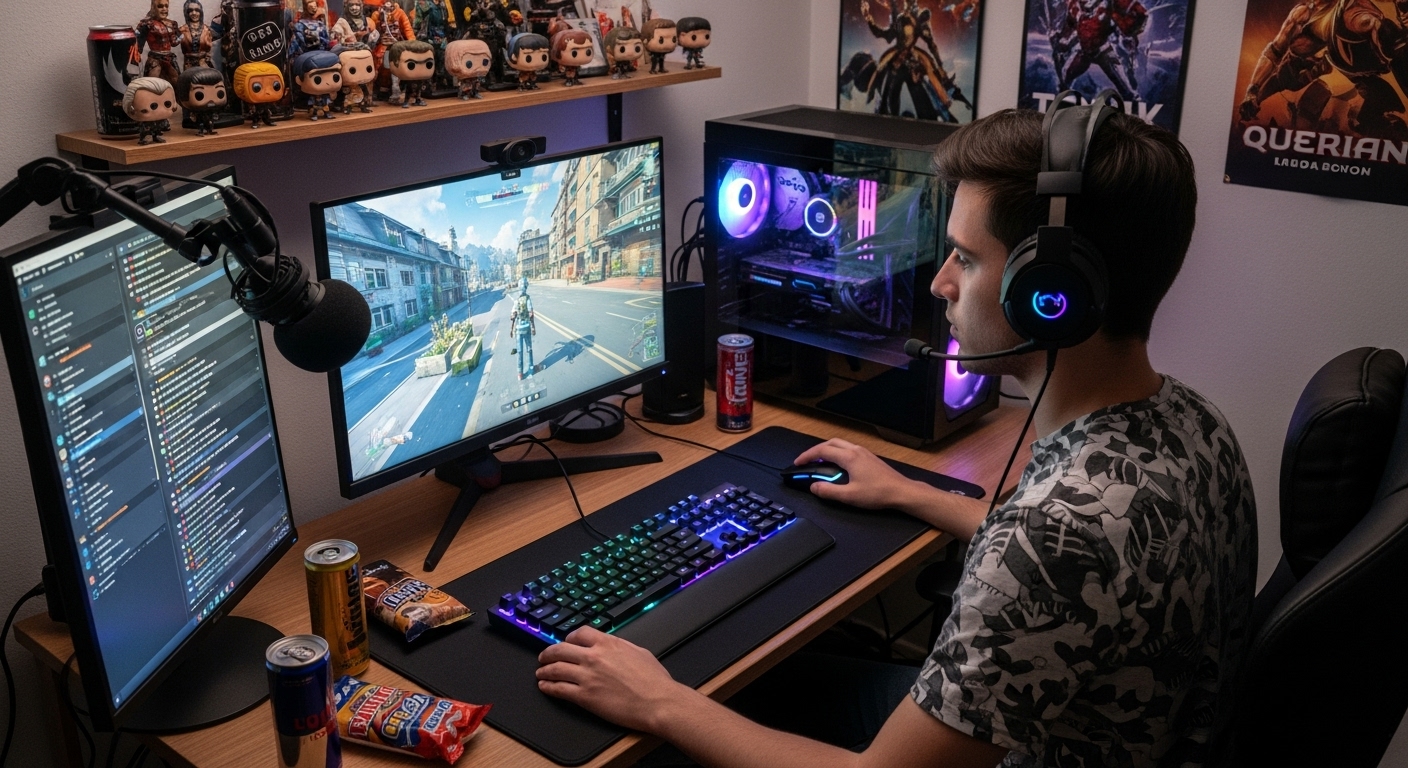
Video gaming has grown from a niche hobby to one of the most dominant forms of entertainment in the modern world. It has evolved in remarkable ways since its inception, influencing culture, technology, and social interactions in ways that few other forms of entertainment have. Whether it’s the fast-paced action of a battle royale, the immersive world of a role-playing game, or the competitive thrills of esports, gaming has become an integral part of our lives. In this blog post, we will take an in-depth look at the history, impact, current trends, and future possibilities of the gaming industry.
The Birth of Gaming: From Pong to the 16-bit Era
The Humble Beginnings: Arcade Games
The story of gaming begins in the 1950s and 1960s, when computer scientists and engineers began experimenting with the idea of interactive entertainment. The very first video game, Tennis for Two, was created in 1958 by physicist William Higinbotham. While rudimentary, it was a significant step toward what would become the video game industry. But it wasn’t until the early 1970s that gaming began to take shape in the form of arcade games. The game Pong, created by Nolan Bushnell in 1972, was the first major commercial success, sparking a boom in arcade gaming. Players could now enjoy digital versions of popular sports like table tennis and basketball, competing for high scores in public spaces like shopping malls and entertainment centers.
Arcades quickly became the go-to place for entertainment, offering a competitive and social experience that attracted players of all ages. The 1970s saw the rise of other classic arcade games like Space Invaders, Pac-Man, and Asteroids, all of which would become cultural icons. Gaming was no longer just about fun; it was a way for people to socialize, challenge their friends, and experience new technologies.
The Console Revolution: From Home Gaming to Cultural Ubiquity
The late 1970s and early 1980s marked the rise of home video game consoles. The Magnavox Odyssey, released in 1972, was the first home console to hit the market, but it was the Atari 2600 released in 1977 that made home gaming a mainstream activity. With its interchangeable cartridges, the Atari 2600 allowed players to enjoy a variety of games without leaving their homes. This shift from arcade gaming to home gaming marked a critical turning point in the industry.
During the early 1980s, home consoles and personal computers like the Commodore 64 and the Apple II began to take over the gaming market. The growth of the home computer market led to a surge in PC gaming, with strategy and simulation games like SimCity and The Bard’s Tale becoming popular. It was also during this time that games began to evolve beyond simple point-scoring mechanics into more immersive and intricate experiences.
The introduction of Nintendo’s Entertainment System (NES) in 1985 helped revitalize the gaming industry after the crash of 1983, a time when video games became over-saturated and the market collapsed. Nintendo’s success was partly due to its innovative approach to game development, with iconic games like Super Mario Bros., The Legend of Zelda, and Metroid revolutionizing how games were designed and played. These games introduced characters, worlds, and stories that players could connect with, setting the foundation for narrative-driven games to become a dominant force in the industry.
The 16-bit Era: The Golden Age of Console Gaming
The Console Wars: Sega vs. Nintendo
The 1990s marked the beginning of what would become known as the console wars, a fierce rivalry between Nintendo and Sega. The release of the Super Nintendo Entertainment System (SNES) in 1990 and the Sega Genesis in 1989 ushered in an era of 16-bit graphics, improved sound, and more sophisticated gameplay. These consoles pushed the boundaries of gaming technology and provided gamers with a rich and colorful gaming experience.
Games like Sonic the Hedgehog (Sega) and Super Mario World (Nintendo) defined this era, capturing the hearts and imaginations of millions of players. At the same time, both companies made significant efforts to lock players into their respective ecosystems by releasing exclusive games, forcing fans to choose a side. The rivalry between Mario and Sonic became the face of this competition, and the battle for supremacy continued throughout the 1990s.
The Rise of 3D Gaming: PlayStation and the Next Generation
The mid-90s marked the arrival of 3D graphics, which would change the entire gaming landscape. The Sony PlayStation, released in 1994, was a revolutionary system that introduced 3D capabilities to console gaming. Titles like Gran Turismo, Metal Gear Solid, and Final Fantasy VII showcased the power of 3D environments, offering deep storytelling, cinematic visuals, and immersive gameplay. This era saw the shift from 2D side-scrolling games to fully realized three-dimensional worlds, setting the stage for the complex and expansive open-world games that would define the future of gaming.
At the same time, Nintendo 64 entered the scene, taking 3D gaming to new heights with titles like Super Mario 64 and The Legend of Zelda: Ocarina of Time. These games introduced more complex gameplay mechanics, real-time 3D rendering, and dynamic storytelling techniques that set the stage for the next generation of games.
The Rise of Online Gaming and the PC Revolution
Online Multiplayer and Massively Multiplayer Online Games (MMOs)
As the internet began to proliferate in the late 90s and early 2000s, online gaming emerged as a major force. The ability to connect players around the world opened up new possibilities for gaming, leading to the rise of massively multiplayer online role-playing games (MMORPGs). EverQuest, released in 1999, was one of the earliest examples of an MMORPG, offering players a vast, persistent world in which they could explore, level up, and interact with others.
The release of World of Warcraft (WoW) in 2004 marked a new era in online gaming, with its expansive world, social features, and immersive gameplay. WoW brought millions of players together from around the globe, creating a virtual community of gamers who would spend hours exploring dungeons, completing quests, and battling each other in large-scale events. MMORPGs became more than just games; they were living, breathing worlds where people could make friendships, build guilds, and even pursue in-game careers.
Alongside these developments, real-time strategy (RTS) games like StarCraft and Warcraft III became hugely popular, offering players the chance to compete against one another in fast-paced, strategic combat. These games paved the way for the rise of esports, a professional gaming scene that would grow rapidly over the next two decades.
The Shift to High-End Graphics and Digital Distribution
The early 2000s saw a significant shift in gaming technology, with high-end graphics becoming a central focus for both console and PC games. The release of Nvidia’s GeForce graphics cards and the rise of DirectX allowed developers to create games with stunning visuals, pushing the boundaries of what was possible in gaming. Titles like Half-Life 2, Crysis, and The Elder Scrolls IV: Oblivion set new standards for realism and immersion, bringing gaming graphics closer to the fidelity of film.
Meanwhile, digital distribution platforms like Steam began to take off, allowing PC gamers to download and install games directly to their computers. Steam revolutionized the gaming industry, offering a platform for both big-budget games and indie developers to reach a wide audience. This marked a shift from physical retail sales to online purchases, and it fundamentally changed the way games were distributed and sold.
Gaming in the Modern Era: From Mobile to Esports
Mobile Gaming: A New Era of Accessibility
In the 2010s, the rise of smartphones transformed the gaming landscape once again. Mobile gaming allowed players to experience games anywhere and anytime, creating a new demographic of casual gamers. Games like Angry Birds, Clash of Clans, and Candy Crush Saga became global phenomena, with millions of people spending hours playing these simple, yet addictive games.
The mobile gaming industry also saw the introduction of the free-to-play model, which allowed players to download and play games for free while offering in-app purchases for cosmetics, upgrades, or new content. This model proved to be immensely successful, with companies like Supercell and King generating billions of dollars in revenue from their mobile titles.
Esports: The Professionalization of Gaming
Esports, or competitive gaming, has evolved into a multi-billion-dollar industry. Games like League of Legends, Dota 2, Overwatch, and Fortnite have turned professional gaming into a legitimate career for many players. Esports tournaments now fill stadiums with thousands of spectators, and the industry continues to grow with corporate sponsorships, broadcasting deals, and dedicated streaming platforms like Twitch.
Esports has even made its way into traditional sports media, with major networks like ESPN broadcasting esports events. The professionalization of esports has created an entire ecosystem around competitive gaming, with organizations, coaches, and analysts now playing vital roles in helping teams succeed.