
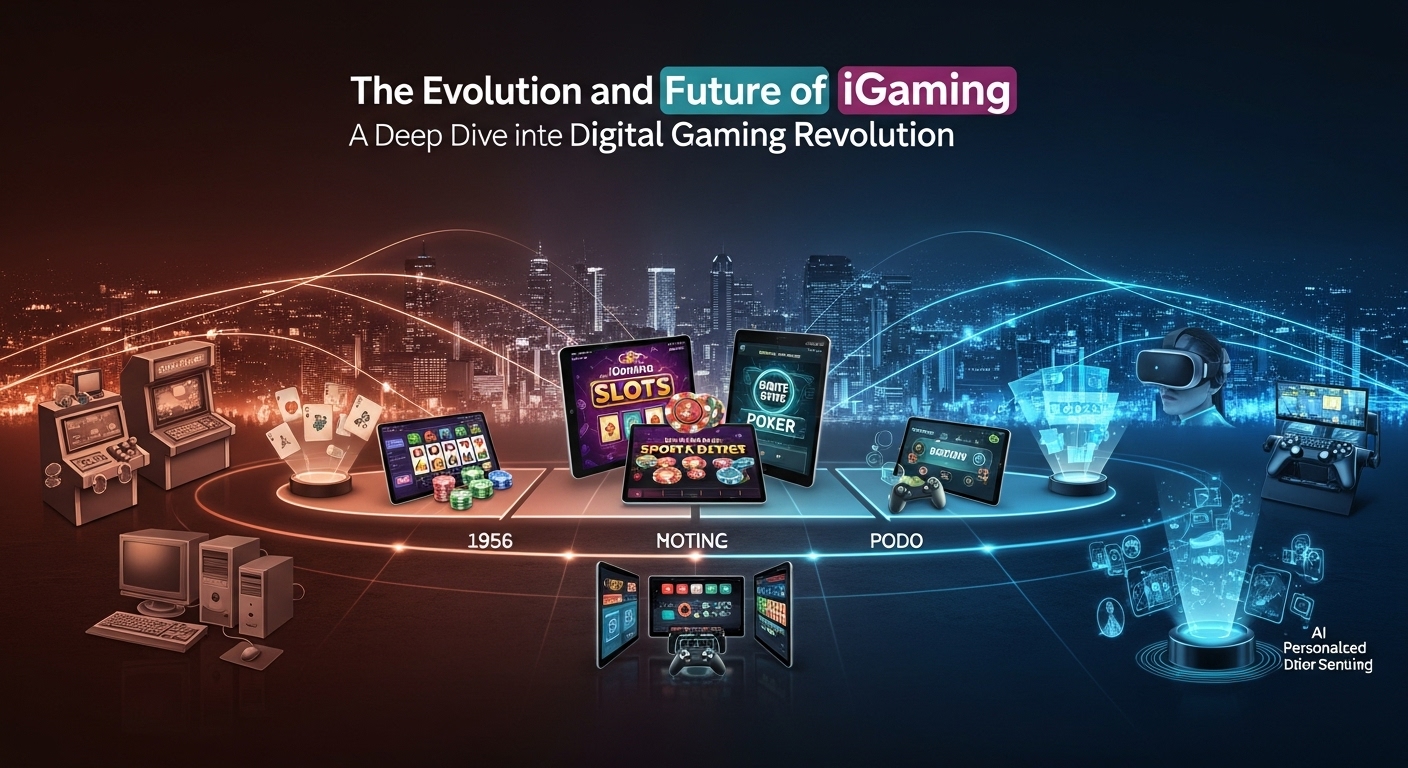
Introduction: The Digital Transformation of Gaming
In the last two decades, few industries have undergone as dramatic a transformation as gaming. What began as a pastime centered around physical casinos, video game arcades, and console-based entertainment has evolved into a massive online ecosystem known as iGaming. This term encompasses all forms of digital gambling and online betting — from casino games and poker rooms to sports wagering and esports tournaments. The global iGaming industry has not only reshaped how people experience entertainment but also how technology, psychology, and business intersect in the modern age.
iGaming represents far more than just an evolution of traditional gambling. It reflects the ongoing shift of human activity into virtual spaces, powered by innovations in mobile technology, high-speed internet, blockchain, artificial intelligence, and immersive experiences. As digital connectivity continues to grow worldwide, iGaming is set to become one of the most significant entertainment sectors of the 21st century.
Understanding iGaming: More Than Just Online Casinos
When people first hear the word iGaming, they often think of online slot machines or digital poker tables. While these are certainly important aspects of the industry, iGaming is a much broader term. It includes all kinds of online games where players wager real money or assets of value. This can include virtual sports, fantasy leagues, online lotteries, live dealer games, and even skill-based competitions that blend gaming with elements of gambling.
The “i” in iGaming stands for “interactive,” reflecting how this form of entertainment depends on user engagement. Players are not passive spectators; they make choices, strategies, and decisions that affect outcomes. Whether a player spins the wheel in a live roulette game or manages a fantasy football team, the experience is driven by interaction, technology, and real-time feedback.
The growth of iGaming also highlights a deeper social shift: people now expect their entertainment to be accessible anywhere and anytime. This desire for constant connection and instant gratification has helped iGaming platforms thrive, especially on mobile devices.
The Early Days: From Physical Casinos to Digital Platforms
The roots of iGaming can be traced back to the early 1990s when the internet was still in its infancy. The first online casino launched in 1994 after Antigua and Barbuda passed the Free Trade and Processing Act, allowing companies to obtain licenses for operating gambling sites. The technology was primitive, the graphics were basic, and the games were limited, but the concept was revolutionary. For the first time, players could experience casino-like entertainment without leaving their homes.
Over the next few years, advancements in encryption and payment processing made online transactions more secure, helping the industry gain legitimacy. By the early 2000s, online poker rooms and sportsbooks began to appear, catering to a growing number of internet users looking for excitement and convenience. The poker boom of the mid-2000s, fueled by televised tournaments and charismatic players, brought global attention to online poker platforms.
The evolution from desktop computers to smartphones marked another major milestone. Mobile iGaming allowed users to play anytime, transforming occasional players into regular participants. The industry’s growth mirrored the rise of app-based ecosystems, where user experience and accessibility became central.
The Role of Technology in iGaming Growth
The success of iGaming has always been intertwined with technological innovation. From secure payment systems to real-time multiplayer features, technology has enabled the industry to expand far beyond the boundaries of traditional gambling.
Modern iGaming platforms rely heavily on cloud computing, artificial intelligence, data analytics, and blockchain technology. AI helps personalize user experiences by analyzing player behavior and offering tailored recommendations. Machine learning also plays a key role in identifying problem gambling patterns and ensuring responsible gaming practices.
Blockchain technology has introduced transparency and trust, particularly through the use of decentralized ledgers and cryptocurrencies. Many players prefer digital currencies for their privacy, speed, and low transaction costs. Smart contracts allow for automated payouts, eliminating the need for third-party intermediaries.
Furthermore, the integration of live streaming and high-quality graphics has created realistic, immersive experiences. Live dealer games now allow players to interact with human hosts in real time, bridging the gap between virtual and physical casinos. As technology continues to advance, the line between real-world and digital experiences becomes increasingly blurred.
Mobile iGaming: The Era of Gaming on the Go
One of the defining characteristics of the modern iGaming landscape is mobility. Smartphones and tablets have become the primary tools for accessing online entertainment. Players no longer need to sit at a computer to enjoy their favorite games; everything is now available through dedicated mobile applications or responsive web platforms.
This shift has transformed both the design and marketing of iGaming products. Developers focus on intuitive interfaces, quick loading times, and one-touch functionalities. The convenience of mobile gaming has expanded the player base beyond traditional gamblers, attracting casual users and younger demographics who prefer on-the-go entertainment.
The combination of push notifications, social integration, and gamified loyalty systems has made mobile iGaming highly engaging. Platforms reward users for consistent participation, offering bonuses, achievements, and virtual prizes. These systems create a sense of progression and accomplishment, similar to that found in video games.
The Social Side of iGaming
While gambling has often been seen as a solitary activity, the rise of online platforms has introduced a strong social component. Players can now chat with dealers, compete with others in multiplayer tournaments, and share their achievements on social media. The digital environment fosters communities where users can interact, learn strategies, and celebrate wins together.
Live dealer games and social casino apps exemplify this trend. These platforms combine entertainment, communication, and competition, transforming iGaming into a more interactive and social experience. This evolution aligns with the broader digital culture where users crave connection and participation rather than passive consumption.
Esports betting has also strengthened the bond between gaming and community. Fans of competitive video games now engage with their favorite teams and players by placing wagers on match outcomes. This crossover between gaming and gambling has created a new subculture within iGaming, one that blurs the distinction between spectator and participant.
Regulation and Legalization: Building a Framework for Trust
As iGaming gained popularity, governments around the world faced the challenge of regulating an industry that transcended borders. Early online gambling platforms often operated in legal gray areas, which led to concerns about fairness, fraud, and responsible gaming.
Today, most countries recognize the importance of establishing clear regulations to protect players and ensure industry transparency. Licensing authorities set strict requirements for security, fairness, and anti-money laundering compliance. Reputable platforms are audited regularly by independent organizations to verify the integrity of their games and random number generators.
Responsible gaming initiatives have become central to modern iGaming ethics. Operators use technology to monitor player behavior and identify early signs of addiction. Self-exclusion tools, deposit limits, and awareness campaigns are now standard features of licensed platforms. These efforts not only protect players but also enhance the credibility of the industry as a whole.
The Economics of iGaming: A Billion-Dollar Industry
The financial growth of iGaming has been nothing short of extraordinary. Once considered a niche segment, it has become a multi-billion-dollar global industry. Its success is driven by digital scalability — unlike physical casinos, online platforms can operate 24/7 with minimal overhead costs. They can reach millions of users simultaneously, offering diverse products without the constraints of geography.
Marketing plays a key role in iGaming economics. Operators invest heavily in digital advertising, affiliate marketing, and sponsorships to attract new users. Celebrity endorsements and sports partnerships have become common, further mainstreaming the industry. At the same time, loyalty programs and bonuses help retain existing players.
The business model of iGaming revolves around engagement and retention. Platforms constantly innovate to offer fresh content, seasonal promotions, and new game mechanics. The introduction of gamification — turning gambling into an experience similar to video gaming — has increased user participation and satisfaction.
The Rise of Cryptocurrency and Blockchain in iGaming
The introduction of blockchain technology and cryptocurrencies has been one of the most significant developments in recent years. Cryptocurrencies such as Bitcoin and Ethereum provide faster and more secure transactions while protecting user privacy. This innovation has attracted a tech-savvy generation of players who value transparency and decentralization.
Blockchain allows for provably fair gaming systems, where every transaction and game outcome can be verified independently. Smart contracts ensure automated and tamper-proof payouts, reducing disputes between operators and players. Decentralized gaming platforms are emerging as alternatives to traditional models, giving users greater control over their funds and experiences.
The use of digital wallets and tokenized rewards systems also opens up new possibilities for cross-platform integration. Players can earn and use digital assets across multiple games or platforms, creating a seamless ecosystem of value and entertainment.
Virtual Reality and the Future of Immersive iGaming
Virtual reality (VR) and augmented reality (AR) represent the next frontier of iGaming innovation. These technologies have the potential to completely redefine how people interact with digital entertainment. Imagine walking through a virtual casino, chatting with other players, and sitting at a digital blackjack table that feels indistinguishable from reality.
Early VR casino prototypes already allow players to explore immersive 3D environments with realistic graphics and spatial audio. As VR headsets become more affordable and powerful, the adoption of immersive iGaming experiences will accelerate. AR, on the other hand, blends digital content with the real world, enabling players to enjoy interactive games in their own surroundings.
The integration of VR and AR also enhances the social and emotional aspects of gaming. Players can express themselves through customizable avatars, communicate using gestures, and experience a sense of presence that traditional screens cannot replicate.
Responsible Gaming and Ethical Challenges
As with any industry involving money and chance, iGaming faces ethical challenges. The ease of access and constant availability can lead to problematic gambling behaviors. Responsible gaming is not just a regulatory requirement but a moral obligation for operators.
Modern iGaming platforms employ sophisticated algorithms to identify at-risk players and provide timely interventions. Educational resources, self-assessment tools, and voluntary exclusion programs help individuals manage their gaming habits responsibly. Collaboration with psychologists, researchers, and advocacy groups has led to more effective prevention strategies.
Transparency and fairness are equally important ethical considerations. Players expect honesty in odds, payouts, and promotional terms. Reputable operators publish clear policies and undergo independent audits to maintain trust.
The Cultural Impact of iGaming
Beyond economics and technology, iGaming has become a cultural phenomenon. It reflects broader societal changes in how people interact, entertain themselves, and manage risk. For many, iGaming represents excitement, freedom, and community; for others, it raises questions about digital addiction and consumer behavior.
The integration of iGaming into popular culture is evident through movies, streaming platforms, and social media influencers. Live-streaming platforms now feature gambling-related content, attracting audiences who enjoy watching others play. This visibility contributes to both the normalization and the scrutiny of online gaming.
In many ways, iGaming mirrors the dual nature of technology itself: it offers immense potential for enjoyment and connection but also demands responsibility and awareness.
The Global Landscape: Regional Trends and Opportunities
The iGaming industry’s growth has varied across regions, depending on cultural attitudes and regulatory frameworks. In Europe, countries such as the United Kingdom and Malta have established strong legal infrastructures, fostering innovation and consumer protection. In North America, the legalization of online sports betting in several U.S. states has sparked rapid expansion.
Asia and Africa represent emerging markets with vast potential due to growing internet penetration and youthful populations. Mobile-first strategies dominate these regions, as smartphones serve as the primary gateway to online entertainment.
The diversity of the global iGaming landscape ensures continuous evolution. Operators must adapt to regional preferences, payment methods, and languages while maintaining universal standards of fairness and security.
The Future Outlook: Innovation and Integration
Looking ahead, the future of iGaming is defined by convergence. Technologies such as artificial intelligence, blockchain, and virtual reality are merging to create seamless, personalized experiences. The focus will shift from isolated platforms to interconnected ecosystems where players can move freely between different types of entertainment.
AI will continue to play a pivotal role in personalizing user journeys, predicting preferences, and enhancing security. Meanwhile, data analytics will help operators understand player behavior in real time, leading to smarter business decisions and improved satisfaction.
The boundaries between gaming, gambling, and social interaction will continue to blur. Future iGaming experiences may resemble interactive entertainment hubs where users can play, compete, socialize, and even earn digital rewards across multiple virtual environments.
Conclusion: iGaming as a Reflection of the Digital Age
The rise of iGaming is a story of technological progress, cultural change, and human adaptability. It demonstrates how innovation can reshape industries, redefine experiences, and challenge traditional norms. From the first online casinos of the 1990s to today’s AI-driven, blockchain-based platforms, iGaming has evolved into a dynamic and global phenomenon.
Its success lies not only in entertainment but in its ability to connect people through shared experiences, competition, and excitement. Yet, as the industry grows, it must continue to balance innovation with responsibility. Ensuring fair play, protecting users, and promoting healthy gaming habits are essential for sustainable growth.
Ultimately, iGaming captures the essence of our digital age — a world where technology amplifies human curiosity, creativity, and desire for connection. It stands as both a symbol of opportunity and a reminder of the importance of mindful engagement in a rapidly evolving virtual landscape.