
Introduction
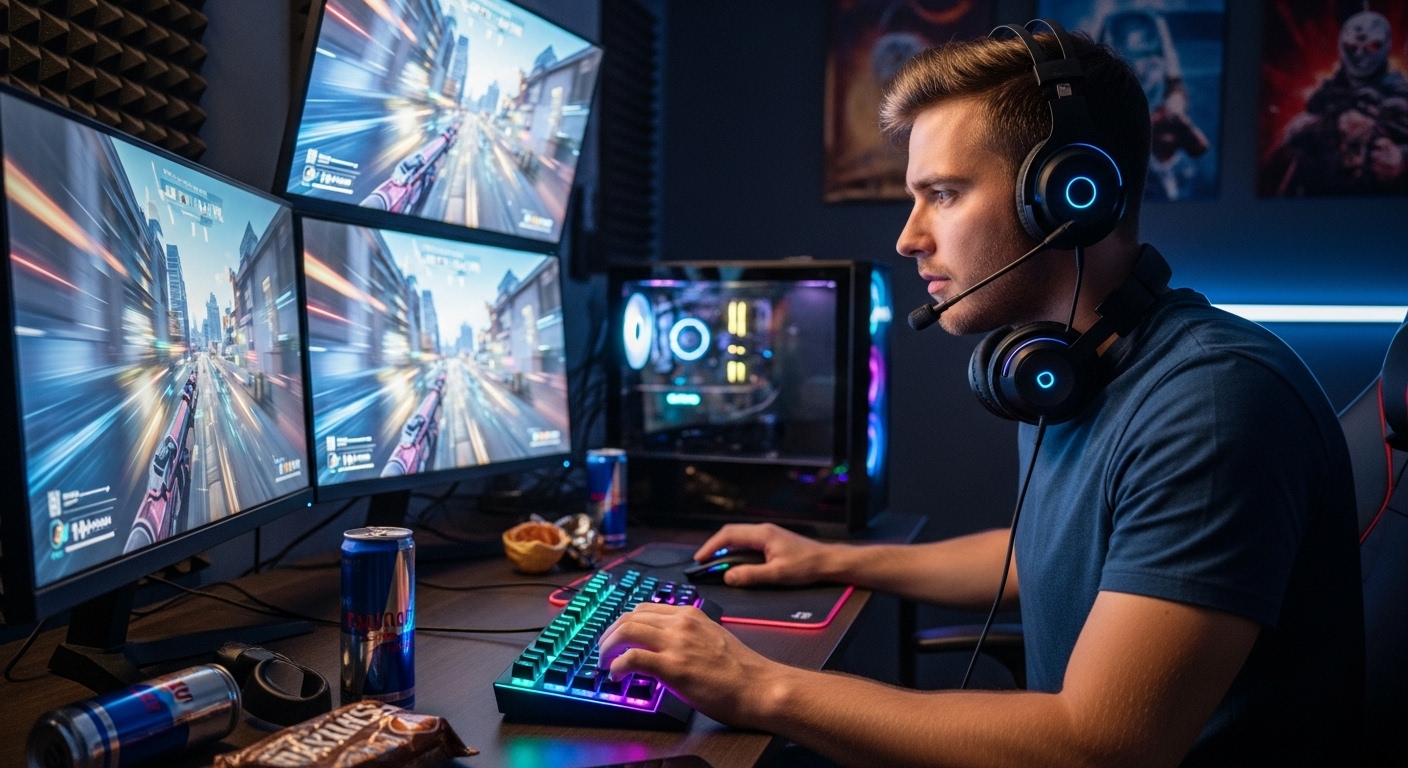
Gaming has evolved from a simple pastime into one of the most powerful and influential industries in the world. What began as basic arcade machines and 8-bit consoles has now become a global entertainment empire that blends art, technology, storytelling, and competition. Video games are no longer confined to living rooms or arcades—they are part of culture, communication, and creativity. Millions of people play games daily, whether on consoles, PCs, or mobile devices, while esports tournaments and streaming platforms have transformed gaming into a professional pursuit.
The gaming industry has not only reshaped entertainment but also technology, education, and social interaction. From virtual worlds to real-world communities, gaming connects people in ways that few other mediums can. This blog explores the evolution of gaming, major innovations, cultural impacts, and how it continues to define modern entertainment.
The Birth of Video Games
The roots of gaming trace back to the mid-20th century when scientists and engineers experimented with computer technology to create simple interactive programs. One of the earliest known games, “Tennis for Two,” was developed in 1958, followed by “Spacewar!” in the early 1960s. These early creations laid the foundation for interactive entertainment.
In the 1970s, arcade games introduced gaming to mainstream audiences. Titles like “Pong,” “Pac-Man,” and “Space Invaders” captured the imagination of players and established gaming as a cultural phenomenon. The simplicity of gameplay and competitive nature of arcade machines made them addictive and accessible to everyone.
By the late 1970s, home consoles such as the Atari 2600 brought gaming into households. For the first time, families could experience video games without visiting arcades. This marked the beginning of gaming as a global form of home entertainment.
The Golden Age of Consoles
The 1980s and 1990s are often regarded as the golden age of gaming. During this period, consoles became more advanced, offering better graphics, sound, and gameplay. Nintendo revolutionized the industry with the release of the Nintendo Entertainment System (NES), introducing iconic characters like Mario, Zelda, and Donkey Kong. Sega entered the competition with the Sega Genesis, leading to one of the most famous rivalries in gaming history.
The 1990s saw the rise of 16-bit and 32-bit systems, bringing richer visuals and deeper gameplay experiences. Titles such as “Super Mario World,” “Sonic the Hedgehog,” and “Final Fantasy” defined an era of creativity and innovation. The introduction of 3D graphics through consoles like the Sony PlayStation and Nintendo 64 expanded possibilities for immersive worlds and storytelling.
Gaming during this period was not just entertainment—it became part of childhood memories for millions. Franchises that started then continue to thrive today, proving the timeless appeal of great gameplay and design.
The Rise of PC Gaming
While consoles dominated living rooms, PCs became a powerful platform for gaming innovation. The flexibility of personal computers allowed developers to experiment with genres, graphics, and online connectivity. Games like “Doom,” “Warcraft,” and “Age of Empires” became classics that defined PC gaming culture.
The 2000s marked the rise of massive multiplayer online games (MMOs) like “World of Warcraft,” which connected millions of players in persistent virtual worlds. Strategy games, first-person shooters, and simulation titles thrived on PC, offering complex mechanics and creative freedom.
Modding communities emerged, allowing players to modify and enhance games, giving rise to entirely new experiences. This collaborative culture continues to influence modern gaming, where player-generated content is an integral part of many popular titles.
The Mobile Gaming Revolution
Mobile technology changed everything once again. With the introduction of smartphones, gaming became accessible to billions of people around the world. Mobile games like “Angry Birds,” “Candy Crush,” and “Clash of Clans” became cultural sensations, appealing to players of all ages.
The simplicity and convenience of mobile gaming made it one of the most profitable sectors of the industry. Free-to-play models with in-app purchases allowed games to reach massive audiences without upfront costs. Today, mobile gaming represents a significant share of global gaming revenue, proving that gaming is not limited to consoles or PCs.
Mobile gaming also introduced new genres and playstyles. Casual, puzzle, and social games attracted players who might not consider themselves “gamers,” expanding the reach and inclusivity of gaming culture.
Online Gaming and Multiplayer Culture
Online gaming redefined how people interact through games. The ability to play with or against others globally transformed gaming from a solitary activity into a social experience. Multiplayer titles like “Counter-Strike,” “Call of Duty,” and “Fortnite” have become global phenomena with millions of active players.
Voice chat, streaming, and community platforms allow players to communicate, compete, and collaborate in real-time. Online gaming has fostered friendships, rivalries, and communities that transcend geography and language.
Esports emerged from this culture, turning competitive gaming into a professional career. Tournaments attract massive audiences, and players compete for life-changing prize pools. The global reach of online gaming has made it a driving force in entertainment and culture.
Storytelling in Games
Modern games have evolved into powerful storytelling mediums. Once focused on mechanics and high scores, games now explore complex narratives, emotional depth, and cinematic presentation. Titles like “The Last of Us,” “Red Dead Redemption,” and “God of War” blend gameplay with storytelling to create immersive experiences that rival films and novels.
Story-driven games allow players to make choices that affect outcomes, giving them agency in how narratives unfold. This interactivity creates emotional connections that traditional media cannot replicate. Characters, dialogue, and music work together to create memorable journeys that stay with players long after they finish playing.
Games now tackle serious themes such as morality, mental health, and societal issues, showcasing their potential as meaningful artistic expressions.
The Impact of Technology on Gaming
Technological advancements have always driven gaming forward. From 8-bit sprites to photorealistic graphics, each generation of hardware brings new possibilities. Graphics processing units (GPUs), faster processors, and advanced physics engines have made modern games visually stunning and technically sophisticated.
Virtual reality (VR) and augmented reality (AR) are pushing the boundaries of immersion. VR headsets transport players into fully interactive 3D environments, while AR blends digital and physical realities. Games like “Beat Saber” and “Pokémon Go” demonstrate how these technologies can redefine play.
Artificial intelligence enhances both gameplay and development. AI-driven opponents provide more realistic challenges, while machine learning helps developers create dynamic environments and lifelike characters. Cloud gaming allows players to stream games without powerful hardware, making high-quality gaming more accessible.
Gaming as a Social and Cultural Force
Gaming has become a dominant cultural influence. It shapes art, music, fashion, and even language. Iconic game franchises inspire movies, television series, and merchandise, blurring the lines between gaming and mainstream entertainment.
Gaming communities are diverse and global. Players collaborate, share experiences, and celebrate creativity. Platforms like streaming services have made gamers into influencers and celebrities, with millions of fans watching their gameplay daily.
Charity events, tournaments, and digital gatherings demonstrate the power of gaming communities to create positive social impact. Gaming fosters connection and belonging, offering spaces where people from different backgrounds unite through shared passion.
Esports and the Professionalization of Gaming
The rise of esports has turned gaming into a legitimate sport. Professional players train rigorously, compete in structured leagues, and earn sponsorships. Esports tournaments fill stadiums and attract viewership comparable to traditional sports.
Games like “League of Legends,” “Dota 2,” and “Counter-Strike: Global Offensive” have established global competitive ecosystems with dedicated fanbases. Teams, coaches, and analysts work together to achieve success, mirroring the structure of traditional athletic organizations.
Esports has also created career opportunities beyond playing. Commentators, event organizers, marketing professionals, and content creators all contribute to the industry’s growth. With universities offering esports scholarships and courses, competitive gaming has firmly established itself in modern culture.
The Psychological and Educational Value of Gaming
Gaming is often misunderstood as purely recreational, but research shows that it offers cognitive and educational benefits. Strategy, problem-solving, and teamwork are integral to many games. Players develop spatial awareness, decision-making skills, and multitasking abilities through interactive play.
Educational games make learning engaging, allowing students to explore science, history, and mathematics through interactive experiences. Simulations and gamified platforms help train professionals in fields like aviation, medicine, and engineering.
Games also offer emotional and therapeutic value. They provide relaxation, creative expression, and social connection. For many, gaming serves as a means to reduce stress, build confidence, and connect with others in meaningful ways.
Diversity and Inclusion in Gaming
The gaming industry is increasingly embracing diversity and inclusion. Developers are creating more diverse characters, stories, and experiences that reflect a broader range of perspectives. Representation matters—not only in the characters players see but also in who develops and voices them.
Gaming communities have also become platforms for social activism and awareness. Developers and players use games to address issues like equality, accessibility, and mental health. This inclusivity strengthens the industry and fosters an environment where everyone can participate.
The Future of Gaming
The future of gaming promises innovation beyond imagination. Advancements in virtual reality, artificial intelligence, cloud computing, and blockchain will continue to reshape how games are created and played.
Cloud gaming will make high-quality experiences accessible on any device, eliminating the need for expensive hardware. AI-driven storytelling will allow games to adapt dynamically to players’ choices, creating personalized narratives.
Virtual worlds will become more immersive, connecting players through shared digital spaces where creativity and collaboration thrive. The metaverse—a concept of interconnected virtual environments—may redefine how gaming integrates with social interaction, entertainment, and even work.
Sustainability will also become a focus. Developers are adopting environmentally friendly practices in hardware design and digital distribution to reduce waste and carbon emissions.
Gaming will continue to bridge generations, cultures, and disciplines. It will remain at the forefront of innovation, creativity, and human connection.
Conclusion
Gaming has come a long way from its humble beginnings. It has evolved into a global phenomenon that combines art, technology, and storytelling. From pixelated adventures to cinematic masterpieces, gaming reflects human creativity and the desire to explore, compete, and connect.
It influences culture, shapes technology, and creates communities that transcend borders. Whether it is through immersive single-player experiences, competitive esports, or casual mobile games, gaming continues to inspire and unite people across the world.
As the industry grows, it faces new challenges—ethical design, inclusivity, and sustainability—but also endless opportunities. The future of gaming is one of limitless imagination, where innovation and creativity will continue to redefine how humans play, learn, and connect.
Gaming is no longer just entertainment—it is a cultural movement, a technological marvel, and a testament to the power of human imagination.